Seems like this should be available in annual reports and QST.
Annual reports back to 2011 at https://www.arrl.org/annual-reports.
For example,
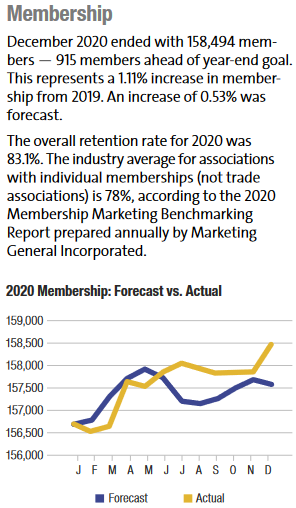
https://www.arrl.org/files/file/About%20ARRL/Annual%20Reports/2020%20Annual%20Report%20ARRL%20AR%20062521%20Singles.pdf p. 16
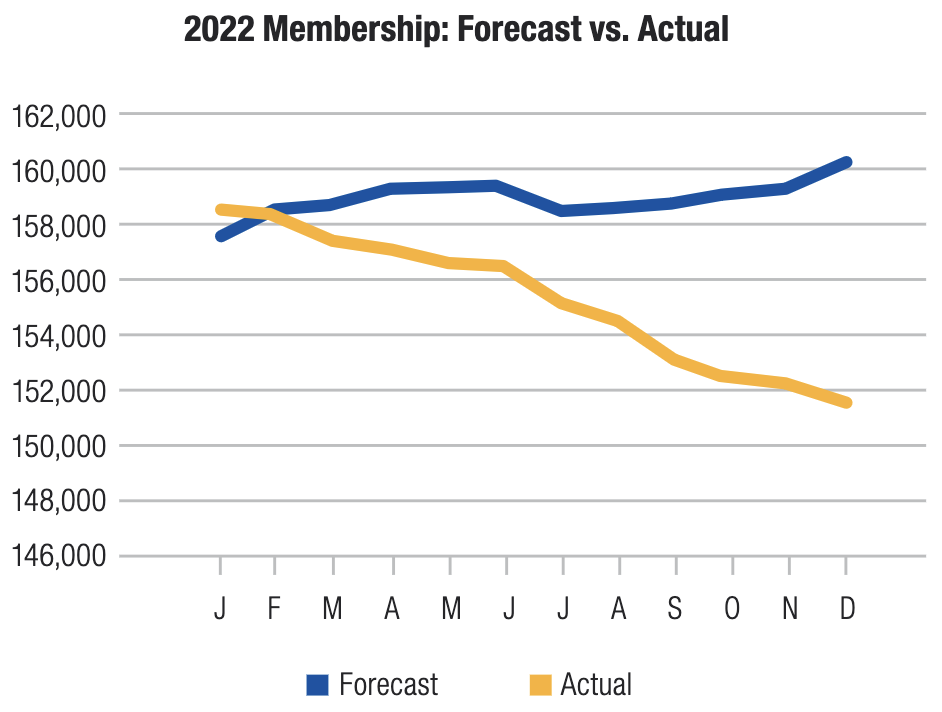
ARRL ended 2022 with 151,840 members. In comparison to last year,
dues revenue remained flat at $6.7 million and continued to be the
largest revenue source for the organization at 40% of the total oper-
ational revenue for the year.
p. 15
Entered 2022.
https://www.arrl.org/files/file/About%20ARRL/Annual%20Reports/2022%20Annual%20Report%20ARRL%20AR2022%20072023C.pdf
p. 26
> ARRL ended 2022 with 151,840 members. In comparison to last year,
dues revenue remained flat at $6.7 million and continued to be the
largest revenue source for the organization at 40% of the total oper-
ational revenue for the year.
p. 15

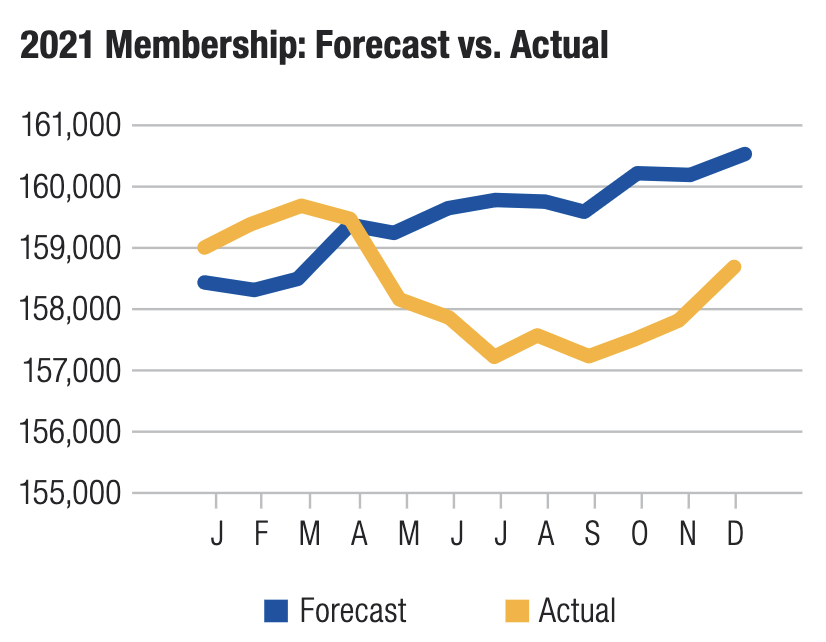
ARRL membership at the end of 2021 remained relatively flat with 158,601 members compared to 158,494 mem-
bers at the end of 2020.
p. 15
2021
https://www.arrl.org/files/file/About%20ARRL/Annual%20Reports/2021%20ARRL%20new%20AR2021%20071822.pdf
p. 28
> ARRL membership at the end of 2021 remained relatively flat with 158,601 members compared to 158,494 mem-
bers at the end of 2020.
p. 15

ARRL membership at the end of 2019 remained relatively flat with 156,755 members compared to 156,899 members at the end of 2018.
Entered 2019 and 2018.
https://www.arrl.org/files/file/About%20ARRL/Annual%20Reports/2019%20annual%20report%20ARRL%20AR%20092520.pdf
p. 20
> ARRL membership at the end of 2019 remained relatively flat with 156,755 members compared to 156,899 members at the end of 2018.
ARRL membership declined in 2017 to 159,070 members, which was a decrease of 3% from the end of 2016.
Added 2017.
https://www.arrl.org/files/file/About%20ARRL/Annual%20Reports/ARRL%202017%20Annual%20Report.pdf
p. 37
> ARRL membership declined in 2017 to 159,070 members, which was a decrease of 3% from the end of 2016.
ARRL membership declined in 2016, although this was expected
because of the dues increase, and followed the historical pattern
seen after previous dues increases. Total membership at the end
of the year stood at 164,070, which was a decrease of 3.8% from
the end of 2015
Added 2016
https://www.arrl.org/files/file/About%20ARRL/Annual%20Reports/ARRL%202016%20Annual%20Report.pdf
p. 39
> ARRL membership declined in 2016, although this was expected
because of the dues increase, and followed the historical pattern
seen after previous dues increases. Total membership at the end
of the year stood at 164,070, which was a decrease of 3.8% from
the end of 2015
With strong membership results in the fourth quarter of the
year, membership in ARRL totaled 170,528 at the end of 2015, an increase of 2.9%
over the end of 2014.
Added 2015.
https://www.arrl.org/files/file/About%20ARRL/Annual%20Reports/2015%20ARRL%20ANNUAL%20REPORT.pdf
p. 29
>With strong membership results in the fourth quarter of the
year, membership in ARRL totaled 170,528 at the end of 2015, an increase of 2.9%
over the end of 2014.
ARRL membership climbed for the eighth
consecutive year, achieving the highest
total in 17 years. There were 165,663
members by the end of December; gains of
3449 members over 2013 and exceeding
the year-end goal by 1287 members.
Membership grew 2.13% (1.21% in 2013,
1.56% in 2012; 0.86% in 2011).
p. 27
For the eighth year in a row, membership in the ARRL increased.
Added 2014.
https://www.arrl.org/files/file/About%20ARRL/Annual%20Reports/2014-AnnualReport-Web.pdf
p. 14
> ARRL membership climbed for the eighth
consecutive year, achieving the highest
total in 17 years. There were 165,663
members by the end of December; gains of
3449 members over 2013 and exceeding
the year-end goal by 1287 members.
Membership grew 2.13% (1.21% in 2013,
1.56% in 2012; 0.86% in 2011).
p. 27
> For the eighth year in a row, membership in the ARRL increased.
There were 162,215 members by the end of December — a gain of 1937 members
over 2012; and our seventh straight year of membership growth.
Added 2013, but this awful chart goes back further.
https://www.arrl.org/files/file/About%20ARRL/Annual%20Reports/2013-ARRL-Annual-Report.pdf
cover

p. 14
> There were 162,215 members by the end of December — a gain of 1937 members
over 2012; and our seventh straight year of membership growth.
ARRL membership ended the year on a strong note with 160,278 members — a
membership high water mark not seen since March 2002. The largest sources of new
member acquisition came from new Amateur Radio licensees, previous members and
appeals to expiring licensees — encouraging them to become active and get on the air.
Field-based recruitment — membership applications received at hamfests, conventions
and through radio clubs — contributed 4% to membership acquisition.
Membership Growth
2012 1.56%
2011 0.86%
2010 0.22%
Added 2012
https://www.arrl.org/files/file/About%20ARRL/Annual%20Reports/2012-ARRL-Annual-Report.pdf
p. 14
> ARRL membership ended the year on a strong note with 160,278 members — a
membership high water mark not seen since March 2002. The largest sources of new
member acquisition came from new Amateur Radio licensees, previous members and
appeals to expiring licensees — encouraging them to become active and get on the air.
Field-based recruitment — membership applications received at hamfests, conventions
and through radio clubs — contributed 4% to membership acquisition.
Membership Growth
2012 1.56%
2011 0.86%
2010 0.22%
About the Cover:
Before 1912, radio amateurs made up their own unique call signs. Hiram Percy
Maxim's self-assigned call was SNY. Not until the Radio Act of 1912 were the
first licenses issued and Irving Vermilya,1ZE, received “Skill Certificate No. 1.”
The first woman ham we know about was Graynella Packer who worked aboard
the SS Mohawk. In 1913 there were 1,322 licensed Amateur Radio operators
but by 1917 there were about 6,000 licensed radio amateurs listed in the federal
call book.
The 1950’s are considered by some to be the “Golden Age” of Amateur Radio,
but the number of licensed radio amateurs in the US in 1956 was only about
140,000. In the past 40 years, the number of US Amateur Radio operators
has continued to grow.
• December 1971: 285,000
• December 1981: 433,000
• December 1991: 494,000
• December 2001: 683,000
• December 2011: 702,056
p. 22
Membership in the organization did grow by almost 1% as
well and we finished the year with a total of 157,813 members.
Added 2011. Still need to add p. 1 license counts.
https://www.arrl.org/files/file/About%20ARRL/Annual%20Reports/2011%20ANNUAL%20REPORT%20for%20viewing_indd.pdf
cover

p. 1
> About the Cover:
Before 1912, radio amateurs made up their own unique call signs. Hiram Percy
Maxim's self-assigned call was SNY. Not until the Radio Act of 1912 were the
first licenses issued and Irving Vermilya,1ZE, received “Skill Certificate No. 1.”
The first woman ham we know about was Graynella Packer who worked aboard
the SS Mohawk. In 1913 there were 1,322 licensed Amateur Radio operators
but by 1917 there were about 6,000 licensed radio amateurs listed in the federal
call book.
The 1950’s are considered by some to be the “Golden Age” of Amateur Radio,
but the number of licensed radio amateurs in the US in 1956 was only about
140,000. In the past 40 years, the number of US Amateur Radio operators
has continued to grow.
• December 1971: 285,000
• December 1981: 433,000
• December 1991: 494,000
• December 2001: 683,000
• December 2011: 702,056
p. 22
> Membership in the organization did grow by almost 1% as
well and we finished the year with a total of 157,813 members.
For the fourth consecutive year, ARRL
membership grew—totaling 156,475
members at year end. Though a small
gain over 2009, we are glad to have
weathered an economic environment
that wasn’t as kind to many other
membership associations.
Added 2010.
https://www.arrl.org/files/file/About%20ARRL/Annual%20Reports/2010%20ANNUAL%20REPORT%20for%20Web%20indd.pdf
p. 4
>For the fourth consecutive year, ARRL
membership grew—totaling 156,475
members at year end. Though a small
gain over 2009, we are glad to have
weathered an economic environment
that wasn’t as kind to many other
membership associations.
2009 was a year where we exceeded our goal of 30,000 new Amateur Radio licensees
and the ARRL membership grew right at 1500 members.
p. 5
In 2009, a new milestone in recent history
was achieved as the organization grew to 156,000 members (156,125
members by December 31). That growth, nearly 1% in 2009 and .7% in 2008, was
the result of high levels of member satisfaction, member retention, and an Amateur
Radio Service that continues to welcome newcomers to its ranks.
p. 12
Added 2009 ARRL membership.
https://www.arrl.org/files/file/About%20ARRL/ARRL%20Annual%20Report%20for%202009.pdf
p. 2
> 2009 was a year where we exceeded our goal of 30,000 new Amateur Radio licensees
and the ARRL membership grew right at 1500 members.
p. 5
> In 2009, a new milestone in recent history
was achieved as the organization grew to 156,000 members (156,125
members by December 31). That growth, nearly 1% in 2009 and .7% in 2008, was
the result of high levels of member satisfaction, member retention, and an Amateur
Radio Service that continues to welcome newcomers to its ranks.
p. 12

As the ARRL began 2008 the main question facing us was whether the growth
spurt that the Amateur Radio Service had enjoyed the previous year would
continue. It did, with the number of new amateur licenses issued by the FCC rising
to 28,066 — a 5% increase over 2007. The ten-year license term makes the total
number of licensees a poor indicator of current trends, but after a period of annual
declines beginning in 2003 this figure also increased by 1.2% during the year.
Thus it appears that the regulatory changes that took effect in February 2007 are
having more than a short-term impact.
ARRL membership also grew slightly; we closed the year with 154,627 members.
Added 2008 ARRL members.
https://www.arrl.org/files/file/About%20ARRL/2008-Annual-Report.pdf
p. 3
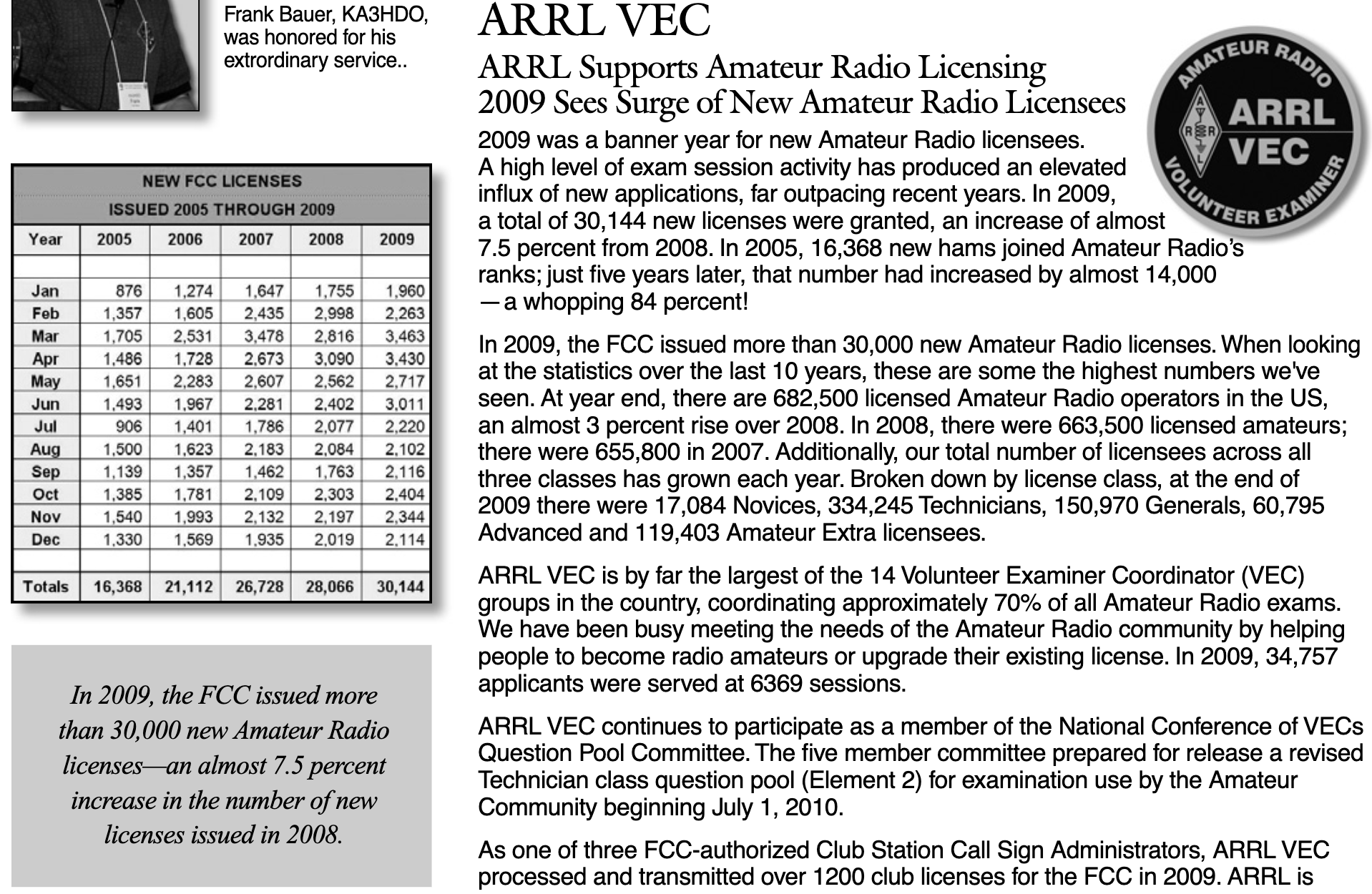
> As the ARRL began 2008 the main question facing us was whether the growth
spurt that the Amateur Radio Service had enjoyed the previous year would
continue. It did, with the number of new amateur licenses issued by the FCC rising
to 28,066 — a 5% increase over 2007. The ten-year license term makes the total
number of licensees a poor indicator of current trends, but after a period of annual
declines beginning in 2003 this figure also increased by 1.2% during the year.
Thus it appears that the regulatory changes that took effect in February 2007 are
having more than a short-term impact.
ARRL membership also grew slightly; we closed the year with 154,627 members.
We ended the year with 153,535 members, a 3.3% increase over the previous
year and our best result on the membership front since 1993.
Added 2007.
https://www.arrl.org/files/file/2007-Annual-Report.pdf
p. 3
> We ended the year with 153,535 members, a 3.3% increase over the previous
year and our best result on the membership front since 1993.
There were 148,641 ARRL members by year-end (148,887 in 2005), overcoming
modest membership losses in recent years.
Added 2006.
https://www.arrl.org/files/file/Annual_Report_2006_web.pdf
p. 5
> There were 148,641 ARRL members by year-end (148,887 in 2005), overcoming
modest membership losses in recent years.
At the end of 2004 ARRL membership stood at 151,727. Compared with
year-end 2003, this figure represents a 1.8% membership loss for the year.
Added 2004.
https://www.arrl.org/files/file/About%20ARRL/Annual-Reportm%202004.pdf
p. 4
> At the end of 2004 ARRL membership stood at 151,727. Compared with
year-end 2003, this figure represents a 1.8% membership loss for the year.
As 2003 came to a close, ARRL membership stood at 154,545. Compared with year-
end 2002, that figure represents a 1.5% membership loss for the year.
Added 2003.
https://www.arrl.org/files/file/About%20ARRL/Annual%20Reports/2003%20Annual%20Report.pdf
p. 4
> As 2003 came to a close, ARRL membership stood at 154,545. Compared with year-
end 2002, that figure represents a 1.5% membership loss for the year.
ARRL finished the year with nearly 157,000 members, about 4000 fewer than when
the year began. A decline in membership always follows a dues increase, so this was
not unexpected following the 15% increase that took effect in July 2001.
I don't see an exact number for 2002.
https://www.arrl.org/files/file/About%20ARRL/Annual%20Report%202002.pdf
p. 4
> ARRL finished the year with nearly 157,000 members, about 4000 fewer than when
the year began. A decline in membership always follows a dues increase, so this was
not unexpected following the 15% increase that took effect in July 2001.
Looks like K4FMH ran out of data about the same place I did (these are interactive, so values can be pulled):
https://chart-studio.plotly.com/~k4fmh/5.embed

https://chart-studio.plotly.com/~k4fmh/7

A few other pages with ARRL-membership-adjacent numbers.
- https://udel.edu/~mm/ham/arrlLife/
- https://www.eqsl.cc/qslcard/MembershipRecord.cfm
- 
What steps is ARRL taking to reverse their membership decline? They're giving away a "Dream Station" if you join! IMO it would be better if they addressed the obvious leadership failure.
Plot shared at https://mastodon.radio/@BrucePerens_K6BP/113913717340555053, don't know the source of the data. I am *not* going to dip myself into Facebook to see what all those comments are about.
> What steps is ARRL taking to reverse their membership decline? They're giving away a "Dream Station" if you join! IMO it would be better if they addressed the obvious leadership failure.

As [VE2UWY pointed out](https://mastodon.radio/@VE2UWY/116081296033467195), we can get QST circulation, which can be tied to ARRL membership.
For example:
- https://archive.org/details/qst-1997_12/page/198/mode/2up?q=%22statement+of+ownership%22
- https://archive.org/details/qstdecember201500unse/page/158/mode/2up?q=%22statement+of+ownership%22
- https://archive.org/details/qstdecember202000unse/page/122/mode/2up?q=+%22statement+of+ownership%22
- https://archive.org/details/qstdecember202100unse/page/122/mode/2up?q=%22statement+of+ownership%22
- https://archive.org/details/qstjanuary202300unse/page/110/mode/2up?q=%22statement+of+ownership%22
From annual reports ...
ARRL ended 2023 with 149,501 members.
ARRL ended [2024] with 137,114 members
Entered these.
Other word-of-mouth sources say maybe 123,000 now.
VE2UWY:
> From annual reports ...
ARRL ended 2023 with 149,501 members.
ARRL ended [2024] with 137,114 members
Entered these.
Other word-of-mouth sources say maybe 123,000 now.
Blocking a user prevents them from interacting with repositories, such as opening or commenting on pull requests or issues. Learn more about blocking a user.
Seems like this should be available in annual reports and QST.
Annual reports back to 2011 at https://www.arrl.org/annual-reports.
For example,

https://www.arrl.org/files/file/About%20ARRL/Annual%20Reports/2020%20Annual%20Report%20ARRL%20AR%20062521%20Singles.pdf p. 16
Entered 2022.
https://www.arrl.org/files/file/About%20ARRL/Annual%20Reports/2022%20Annual%20Report%20ARRL%20AR2022%20072023C.pdf
p. 26
p. 15
2021
https://www.arrl.org/files/file/About%20ARRL/Annual%20Reports/2021%20ARRL%20new%20AR2021%20071822.pdf
p. 28
p. 15
Entered 2019 and 2018.
https://www.arrl.org/files/file/About%20ARRL/Annual%20Reports/2019%20annual%20report%20ARRL%20AR%20092520.pdf
p. 20
Added 2017.
https://www.arrl.org/files/file/About%20ARRL/Annual%20Reports/ARRL%202017%20Annual%20Report.pdf
p. 37
Added 2016
https://www.arrl.org/files/file/About%20ARRL/Annual%20Reports/ARRL%202016%20Annual%20Report.pdf
p. 39
Added 2015.
https://www.arrl.org/files/file/About%20ARRL/Annual%20Reports/2015%20ARRL%20ANNUAL%20REPORT.pdf
p. 29
Added 2014.
https://www.arrl.org/files/file/About%20ARRL/Annual%20Reports/2014-AnnualReport-Web.pdf
p. 14
p. 27
Added 2013, but this awful chart goes back further.

https://www.arrl.org/files/file/About%20ARRL/Annual%20Reports/2013-ARRL-Annual-Report.pdf
cover
p. 14
Added 2012
https://www.arrl.org/files/file/About%20ARRL/Annual%20Reports/2012-ARRL-Annual-Report.pdf
p. 14
Added 2011. Still need to add p. 1 license counts.

https://www.arrl.org/files/file/About%20ARRL/Annual%20Reports/2011%20ANNUAL%20REPORT%20for%20viewing_indd.pdf
cover
p. 1
p. 22
Added 2010.
https://www.arrl.org/files/file/About%20ARRL/Annual%20Reports/2010%20ANNUAL%20REPORT%20for%20Web%20indd.pdf
p. 4
Added 2009 ARRL membership.
https://www.arrl.org/files/file/About%20ARRL/ARRL%20Annual%20Report%20for%202009.pdf
p. 2
p. 5
p. 12
Added 2008 ARRL members.
https://www.arrl.org/files/file/About%20ARRL/2008-Annual-Report.pdf
p. 3
Added 2007.
https://www.arrl.org/files/file/2007-Annual-Report.pdf
p. 3
Added 2006.
https://www.arrl.org/files/file/Annual_Report_2006_web.pdf
p. 5
Added 2004.
https://www.arrl.org/files/file/About%20ARRL/Annual-Reportm%202004.pdf
p. 4
Added 2003.
https://www.arrl.org/files/file/About%20ARRL/Annual%20Reports/2003%20Annual%20Report.pdf
p. 4
I don't see an exact number for 2002.
https://www.arrl.org/files/file/About%20ARRL/Annual%20Report%202002.pdf
p. 4
Looks like K4FMH ran out of data about the same place I did (these are interactive, so values can be pulled):
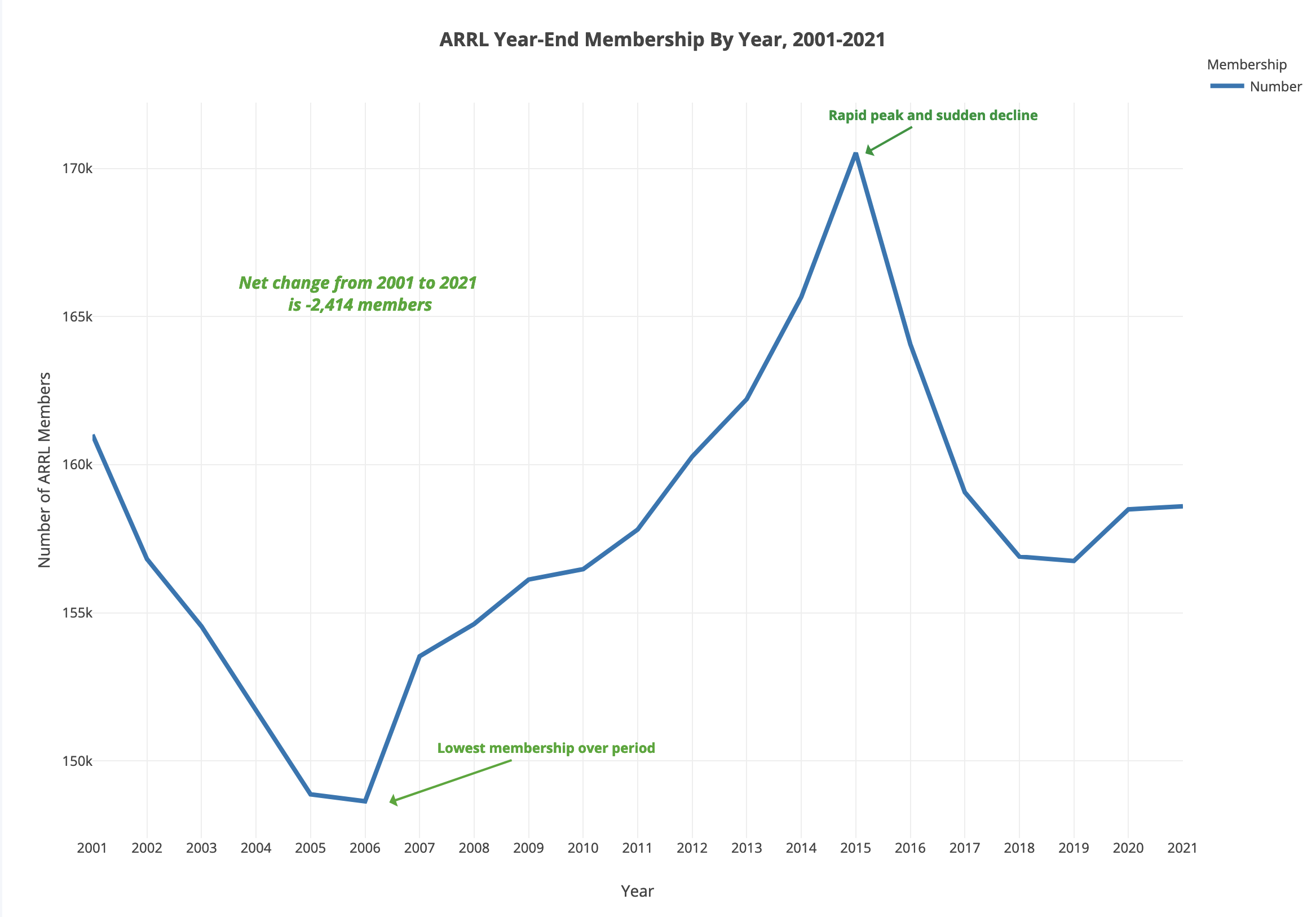
https://chart-studio.plotly.com/~k4fmh/5.embed
https://chart-studio.plotly.com/~k4fmh/7
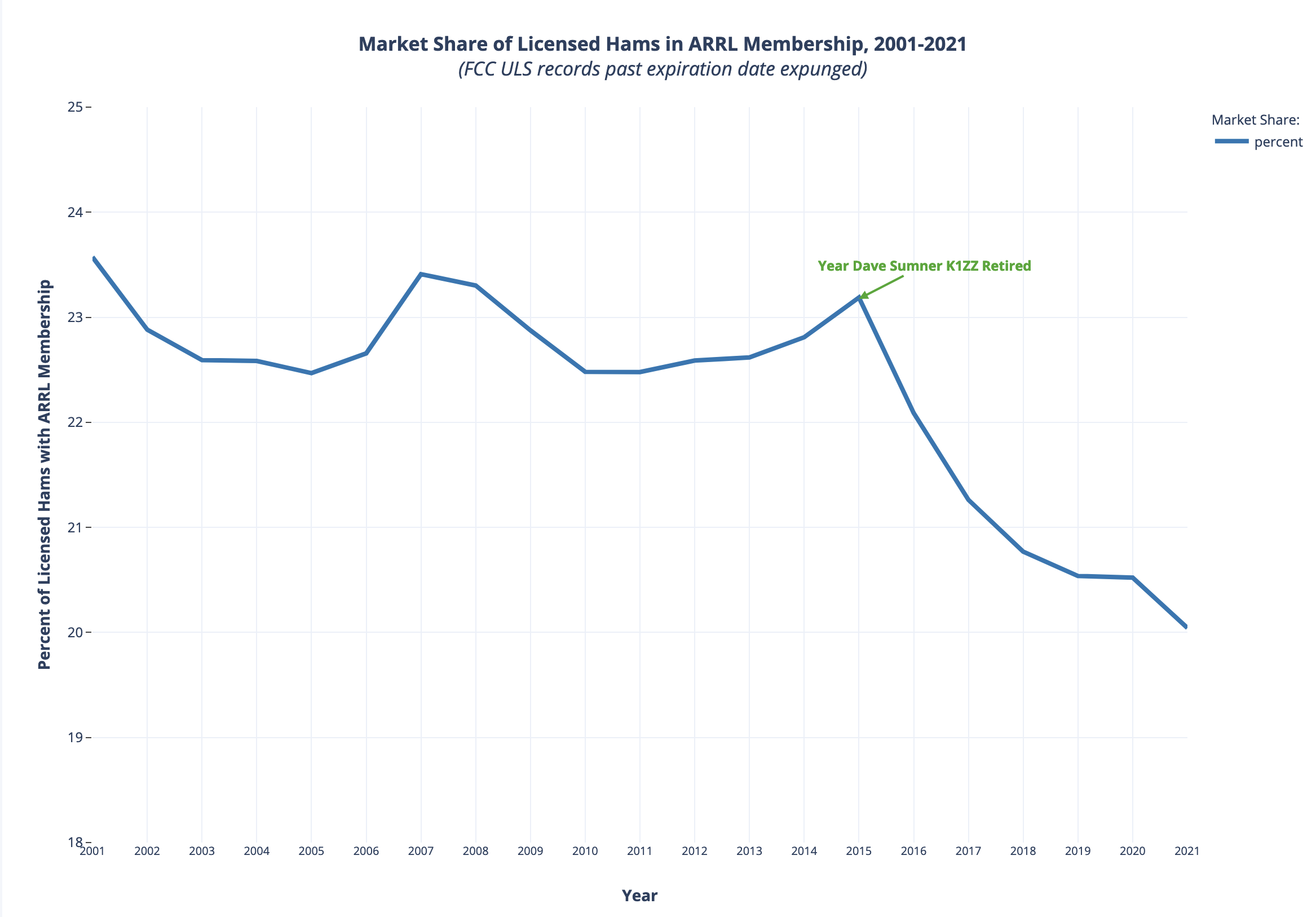
A few other pages with ARRL-membership-adjacent numbers.
Plot shared at https://mastodon.radio/@BrucePerens_K6BP/113913717340555053, don't know the source of the data. I am not going to dip myself into Facebook to see what all those comments are about.
https://k4fmh.com/2025/01/31/they-went-down-down-down-and-the-flames-are-higher-but-its-not-too-late/
As VE2UWY pointed out, we can get QST circulation, which can be tied to ARRL membership.
For example:
VE2UWY:
Entered these.
Other word-of-mouth sources say maybe 123,000 now.